
Preventive Maintenance: A Practical Guide to Improving Industrial Efficiency
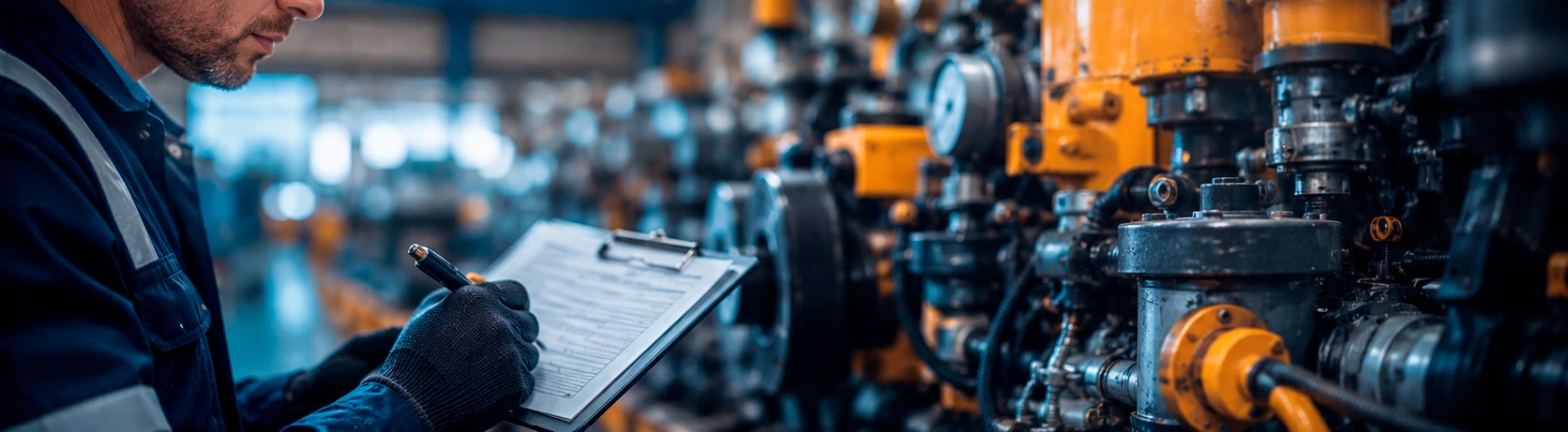
Industrial equipment rarely fails without warning. In many cases, small signs appear long before a serious breakdown occurs: unusual vibration, increased noise, higher energy consumption, reduced output or minor fluid leaks.
When these signs are ignored, a relatively simple maintenance issue can develop into an expensive operational problem. Production may be interrupted, employees may be left waiting and urgent repairs may require parts that are not immediately available.
Preventive maintenance helps businesses address these risks before they affect productivity. Rather than waiting for equipment to stop working, maintenance teams inspect, clean, lubricate and replace components according to a planned schedule.
The objective is not to perform maintenance as often as possible. It is to perform the right work at the right time.
What Is Preventive Maintenance?
Preventive maintenance is the scheduled inspection and servicing of equipment before a failure occurs. Maintenance intervals may be based on operating hours, production cycles, calendar dates or manufacturer recommendations.
Typical preventive maintenance tasks include:
- Inspecting equipment for wear, corrosion and damage
- Cleaning filters, motors, vents and moving components
- Checking fluid levels and replacing lubricants
- Tightening electrical and mechanical connections
- Testing safety systems and control devices
- Replacing belts, seals, hoses and other wear components
- Calibrating measuring and control equipment
- Recording changes in equipment performance
A strong maintenance programme combines these routine activities with accurate operational data. Maintenance should not be based entirely on habit or assumptions. Teams need to understand how each machine is used and which components are most likely to affect its performance.
Begin With Critical Equipment
Not every machine requires the same level of attention. A small tool that can be replaced quickly does not present the same operational risk as a pump, compressor, production machine or control system that supports an entire process.
Start by identifying equipment that would create the greatest disruption if it failed. Consider:
- How many operations depend on the equipment
- Whether a replacement is immediately available
- How long repairs would normally take
- Whether failure could create a safety risk
- How much production would be affected
- Whether replacement parts are easy to source
This allows maintenance teams to focus resources on equipment that has the greatest effect on operational efficiency.
Create Realistic Maintenance Intervals
Following manufacturer recommendations is an important starting point, but actual operating conditions should also be considered.
Equipment working in a clean, temperature-controlled environment may require less frequent servicing than equipment exposed to dust, moisture, vibration, chemicals or continuous operation.
Maintenance intervals should reflect:
- Daily operating hours
- Production intensity
- Environmental conditions
- Equipment age
- Previous repair history
- Frequency of starts and stops
- Load and pressure levels
Intervals should also be reviewed over time. If inspections repeatedly show that a component is still in excellent condition, the schedule may be adjusted. If wear appears earlier than expected, servicing should take place more frequently.
An effective maintenance programme develops together with the equipment.
Use Standardised Inspection Checklists
Maintenance quality should not depend entirely on who performs the inspection.
A standardised checklist ensures that technicians review the same important components each time. It also reduces the likelihood that small but critical details will be overlooked.
A useful inspection checklist may include:
- Visible signs of wear or damage
- Unusual noise or vibration
- Temperature changes
- Leaks and pressure irregularities
- Condition of belts, hoses, seals and bearings
- Electrical connections and cables
- Guards, emergency stops and safety devices
- Lubrication levels
- Filters and ventilation openings
- Output quality and operating speed
Checklists should be clear and specific. “Inspect the machine” is too general. “Check the drive belt for cracks, looseness and uneven wear” gives the technician a measurable task.
Keep Accurate Maintenance Records
Maintenance records provide valuable information about the condition and performance of equipment.
Each record should identify:
- The equipment inspected
- Date and time of service
- Operating hours or production cycles
- Tasks completed
- Parts replaced
- Problems identified
- Corrective action taken
- Name of the technician
- Recommended next inspection date
Over time, these records help reveal patterns. A component that repeatedly fails may be unsuitable for the application. A machine that requires increasingly frequent repairs may need a more detailed assessment or replacement.
Without proper records, businesses may continue addressing the same symptoms without identifying the underlying cause.
Maintain an Organised Supply of Essential Parts
Preventive maintenance can still lead to unnecessary downtime if replacement parts are unavailable.
Businesses should identify components that are inexpensive, commonly replaced or critical to continued operation. Depending on the equipment, this may include belts, bearings, seals, filters, hoses, fittings, connectors, relays, switches, lubricants and protective components.
The objective is not to store every possible part. Excess inventory can create unnecessary costs, especially if components become outdated or deteriorate during storage.
A practical spare-parts strategy focuses on:
- Frequently used maintenance items
- Components with long delivery times
- Parts that could stop critical equipment
- Standard components used across several machines
- Items with predictable replacement intervals
Inventory should be reviewed regularly to confirm quantities, storage conditions and compatibility.
Train Operators to Identify Early Warning Signs
Machine operators interact with equipment every day and are often the first people to notice a change.
They should understand how the equipment normally sounds, feels and performs. Operators do not need to become maintenance technicians, but they should know which warning signs require attention.
These may include:
- Increased vibration
- Unusual smells or sounds
- Reduced operating speed
- Inconsistent output
- Excessive heat
- Fluid or air leaks
- Unexpected warning messages
- Higher energy use
- Difficulty starting or stopping
Clear reporting procedures are equally important. Employees should know who to contact, what information to provide and whether the equipment should continue operating.
Measure the Results
A preventive maintenance programme should produce measurable improvements.
Useful indicators include:
- Frequency of unexpected failures
- Total equipment downtime
- Average repair time
- Maintenance cost per machine
- Number of emergency repairs
- Equipment availability
- Production output
- Defect or rejection rates
- Energy and consumable usage
These indicators help determine whether maintenance activities are improving efficiency or simply adding work.
Maintenance as an Efficiency Strategy
Preventive maintenance is not only a technical responsibility. It is an operational strategy.
Well-maintained equipment performs more consistently, produces fewer interruptions and gives businesses greater control over production schedules. It also allows maintenance teams to plan labour, parts and servicing instead of reacting to emergencies.
The most effective approach begins with critical equipment, realistic schedules, clear inspection procedures and reliable maintenance records.
Small actions completed consistently can prevent major disruptions later.
For support with industrial equipment, replacement parts, tools and maintenance-related supplies, contact USTI Supply Inc. to discuss the requirements of your operation.